Anticipating the Next Oil Crisis: How to Capitalize
Source: stockwars / Shutterstock.com
Listen to the audio version of this article (generated by AI).
Market reactions to oil news can be impulsive, often driven by fear and speculation. However, experienced traders like Jonathan Rose approach these headlines with a different mindset: they spot signals amidst the chaos.
In a recent conversation, Rose outlined two key market indicators that are crucial during energy crises. He suggests that these signals are not only indicative of current dynamics but may point toward substantial opportunities in oil and refinery sectors.
Indeed, one of his refined trades this year capitalized on these indicators, yielding an impressive 80% return within a week. Understanding these signals could be essential for energy investors navigating today's turbulent waters.
Jonathan is set to share a more detailed analysis of this trading strategy during his upcoming Convergence Summit alongside Marc Chaikin on May 28 at 8 p.m. Eastern. You can secure your spot here.
If you're in the energy space, comprehending these signals is more than a strategy; it could be a path to lucrative insights as volatility appears to be becoming a permanent fixture in this market.
I’ll leave it to Jonathan to elaborate further.
Enjoy your evening,
Jeff Remsburg
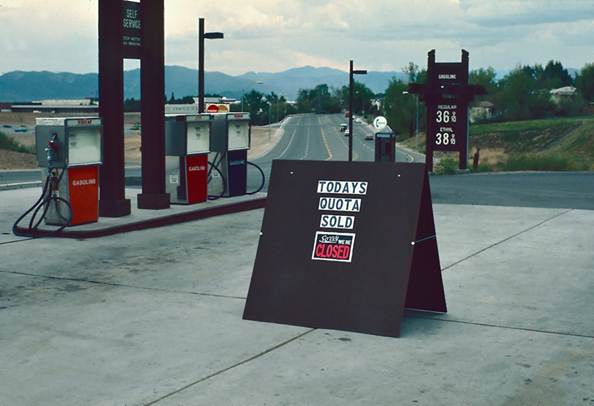
The oil crisis of October 1973 serves as a poignant reminder of how vulnerable the global oil infrastructure can be. Following a coalition of Arab states' actions against Israel, the U.S. response triggered a dramatic OPEC oil embargo, resulting in soaring crude prices that surged from $2.90 to $11.65 per barrel in just three months. In the U.S., gas prices shot up 36% nearly overnight, leading to long lines at gas stations and widespread rationing.
Credit: JudiLen
During this period, Americans faced unprecedented fuel shortages and the government instituted a national speed limit and conservation measures, calling them patriotic. These shocks illustrated not only America's dependence on oil but also the system's fragility in the face of geopolitical upheaval.
A decade later, another upheaval, the Iranian Revolution, propelled oil prices to $35 a barrel, nearly twelve times their pre-embargo value. What these episodes underscored was the precariousness of oil supply amid shifting political alliances.
Fast forward fifty years, and we find ourselves again on the cusp of significant disruptions in the oil market. The implications of these changes are profound.
In this analysis, I aim to provide you with actionable insights beyond mere speculation.
Let's examine how I assess the oil market during tumultuous times, focusing on two key signals that can guide strategic investment choices.
If you grasp these indicators, you can redefine how you interpret oil news and position your investments ahead of broader market movements.
Current Conditions: A Recipe for Opportunity
The ongoing conflict between the U.S. and Iran has put immense pressure on the Strait of Hormuz, a vital thoroughfare for global oil transport, handling approximately 20% of daily supply. As tensions escalated, the price of West Texas Intermediate crude jumped from around $66 to over $100, while Brent crude prices surged from $71 to $119—an almost instantaneous doubling of prices.
The real story, however, lies not just in price swings but in the responses from OPEC. In a significant shift, the United Arab Emirates announced its exit from the cartel—an event that fundamentally alters the structure governing global oil supply. With the UAE being among the top five oil producers, this withdrawal is critical, not merely a footnote in diplomatic discourse.
The context of this announcement is alarming. It was made shortly before a crucial OPEC meeting, amidst rising regional tensions and the Strait of Hormuz under siege. Unlike the 1973 crisis, which erupted from external forces leveraging oil as a weapon, we now witness OPEC’s cohesion fraying from within. The instability this introduces could prove more profound and difficult to stabilize than in previous crises.
This current volatility isn’t a fleeting concern. It’s here to stay.
The real question is, how can you position yourself to benefit from this ongoing instability?
Decoding Market Signals for Strategic Positioning
Over the course of nearly three decades trading energy markets—from the futures pits of Chicago to the CBOE's options floor—I've learned a critical lesson: predicting price movements isn’t as effective as interpreting existing market signals.
Two principal indicators lay the groundwork for understanding oil volatility. They're not about foretelling the future; they are tools that uncover potential profit lanes.
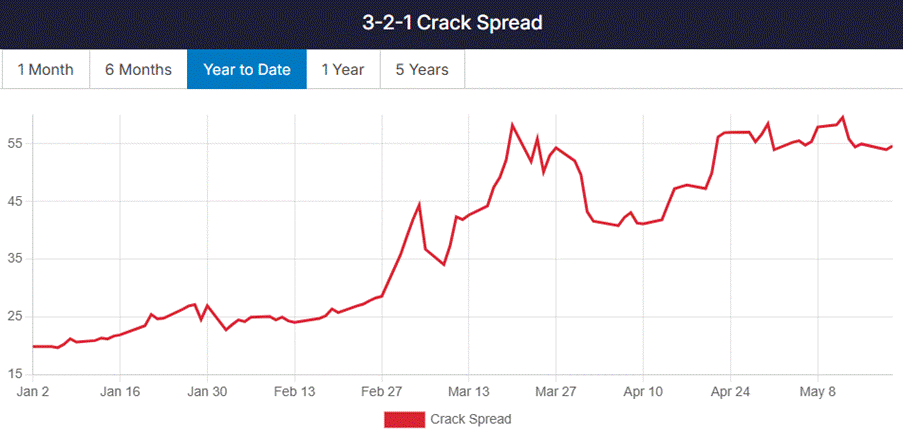
First, consider the crack spread. This figure essentially represents refiners' profit margins, akin to a bakery where flour is the crude oil input and bread is the output. The profit margin hinges on the difference between crude costs and refined product sales. As the crack spread widens, indicating larger margins for refiners, stock prices generally follow suit.
Currently, the crack spread is widening. Refiners purchased crude oil at lower prices weeks ago, yet they are selling gasoline and diesel at rates reflecting a $106 crude cost. This gap signifies a significant profit margin, directly influencing earnings for refiners.
The second indicator to gauge is backwardation in futures contracts. This term may sound complex, but it simply means that near-term contracts carry a higher price than long-term ones, indicating immediate demand. Currently, the WTI futures curve reflects this trend, with short-term contracts commanding premiums as market participants pay extra for prompt supply due to concerns over tight availability.
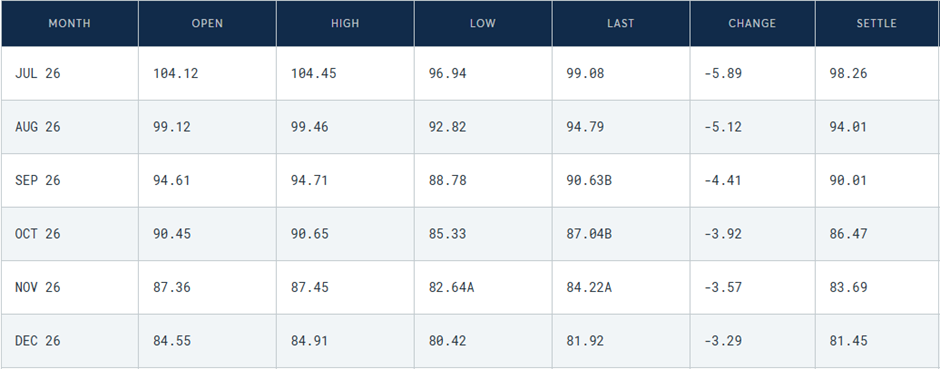
This scenario signals a market grappling with immediate supply constraints while anticipating a future easing. By recognizing this distinction, investors can identify where capital is flowing—in sectors directly tied to urgent supply necessities, such as refiners and certain producers.
When both the crack spread is expanding and futures are in backwardation, it sends a strong message: refineries are generating substantial profits, and institutional players are paying handsomely for immediate supply. Historically, this kind of setup leads to significant upward movements in stock prices for refiners and energy-related companies.
This strategic groundwork laid earlier this year showcases how these signals converged to generate profitable trades.
A Recent Successful Trade: Evidence of the System
Back in April, as both indicators aligned favorably, I recognized a prime opportunity. The crack spread was widening, and the futures curves indicated backwardation. My focus narrowed to one company: CVR Energy Inc. (CVI). This midsized independent refiner was poised to benefit directly from the expanding margins suggested by these signals.
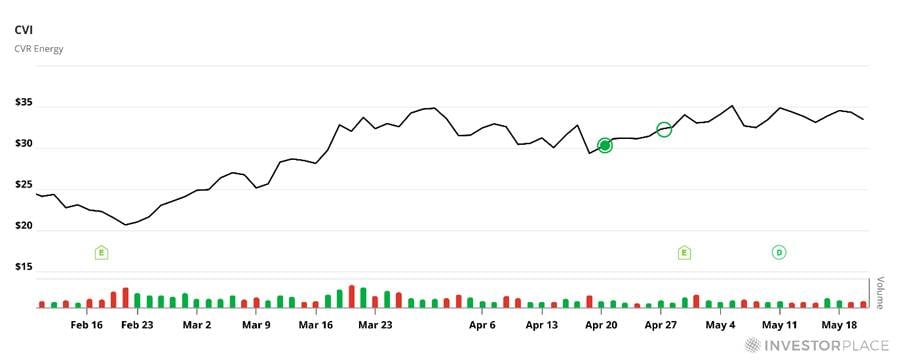
On April 20, I initiated a bullish position on CVR, acting on the clarity of the signals and defined risks. Within just a week, we achieved an 80% return on this underfollowed refiner.
This isn't mere luck. Such outcomes stem from interpreting market signals rather than attempting to forecast prices. The expanding crack spread indicated hefty earnings potential for refiners, while backwardation highlighted immediate supply tightness. CVR was an optimal investment choice that aligned with those signals.
The model is clear: Catalyst. Signal. Trade.
Remarkably, both signals are resonating again.
The crack spread is expanding at an accelerated rate, and the WTI futures curve is deep in backwardation. Adding to the turmoil, the UAE’s departure from OPEC represents a fundamental disruption that’s likely to persist. Conditions in the Strait of Hormuz remain precarious, further feeding into this volatile scenario.
The opportunity that enabled our CVR trades has revisited us. The entities benefitting most are those aligned with refined products, select producers, and companies deeply entrenched in U.S. domestic supply chains.
What remains is not whether there’s a clear opportunity ahead but whether you possess the insight to seize it before it becomes mainstream on Wall Street.
My Current Strategy and Your Next Steps
One lesson that I continually reinforce with my members is this: recognize your strengths and acknowledge where you require assistance.
My expertise lies in interpreting volatility and identifying setups ahead of the majority. However, discerning the ultimate direction of substantial price movements can be a daunting challenge. That’s where Marc Chaikin steps in; he has dedicated decades to crafting quantitative tools that help major Wall Street players navigate market trajectories. His Money Flow system excels in analyzing the direction of capital flow.
While I focus on volatility-driven opportunities, Marc's insights help clarify future directional movements.
Together, we've developed a comprehensive strategy called The Convergence, which will be unveiled in our inaugural live event on May 28 at 8 p.m. Eastern. (Reserve your spot for this free event now.)
With fractures appearing in the global oil framework, these two crucial signals are once again validating their importance. Timing is critical; the window to position yourself ahead of Wall Street is frequently shorter than anticipated.
This is a complimentary opportunity. It represents the first time our combined strategies will be shared with an audience.
Reserve your spot now. You won’t want to miss it.
Stay ahead of the curve,
Jonathan Rose
Founder, Masters in Trading
P.S. Jonathan emphasizes a vital insight: the market often begins shifting well before the news catches up. This dynamic will be a core topic during our Convergence Summit on May 28, where we’ll explore how to fuse volatility strategies with institutional money-flow indicators to unearth early potential opportunities. If you haven't already secured a seat, you can do that here.