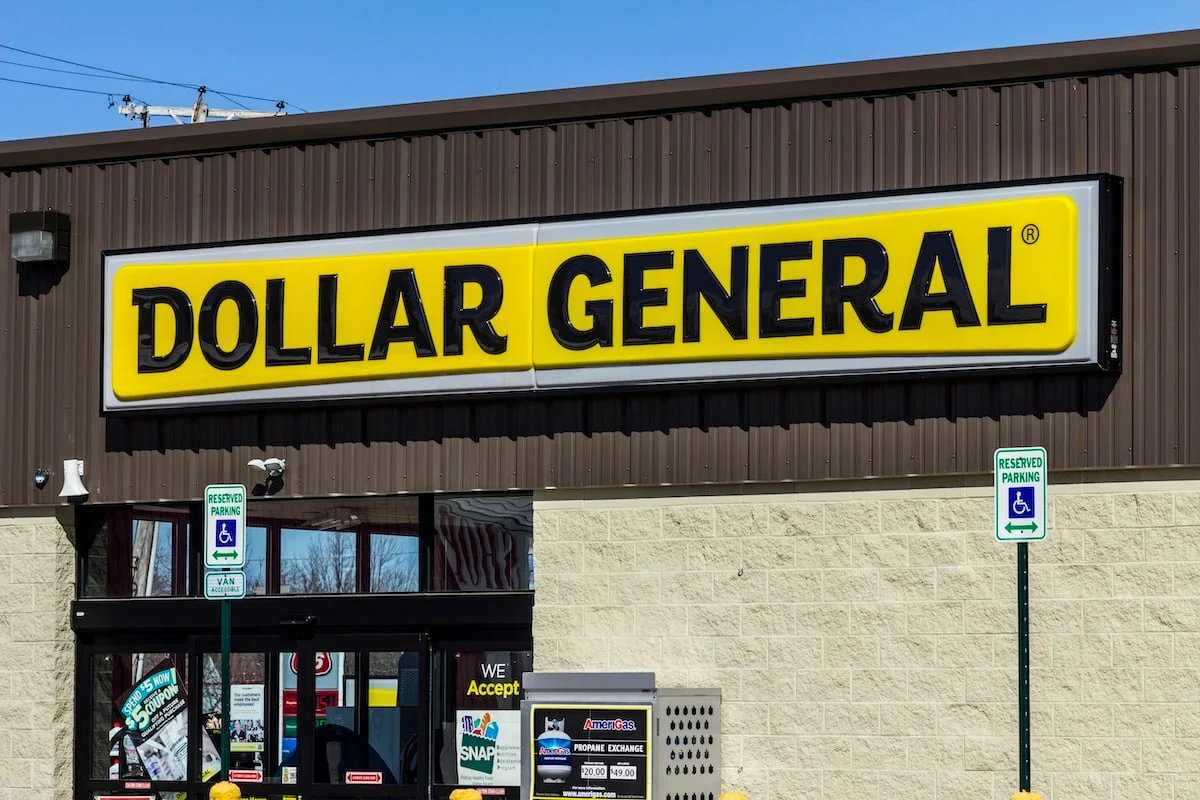
The financial stakes in the Dollar General pricing case turn on a small gap repeated across a large store network: the price shown to shoppers and the amount charged at checkout. On October 26, 2026, the Federal Trade Commission and 20 states sued the discount retailer in the U.S. District Court for the Middle District of Tennessee. Their 95-page complaint alleges that customers were routinely charged more than shelf labels, stickers, advertisements, or the company’s app displayed.
The complaint describes a pattern that regulators say persisted for years, despite customer reports and state inspections. Dollar General says it will defend the litigation vigorously. The claims remain allegations, and the court will decide whether the company violated the law.
Dollar General has betrayed the trust of millions of American consumers and imposed significant financial harm on communities and consumers who are already struggling to make their paychecks last.” — Christopher Mufarrige, Director of the FTC’s Bureau of Consumer Protection
A pricing problem measured across states
Regulators cite at least 29,265 customer complaints labeled “Did Not Honor Marked Price” between January 2023 and March 2026. The reports came from all 48 states where Dollar General operates. The complaint also points to earlier enforcement: the company reached seven settlements with six states since 2019, involving more than $6 million in payments.
State inspection results vary by place and period, but several jurisdictions reported frequent failures under their pricing checks. The complaint says a federal procedure used by 33 states considers a store to have failed when more than 2% of sampled products carry an incorrect price. The figures below are the results cited for 12 states; they use different time spans and inspection methods, so they should be read as state-specific findings rather than a single nationwide error rate.
| State | Period | What Inspectors Found |
|---|---|---|
| Kansas | Jan. 2023–Mar. 2026 | Failed over 39% of inspections |
| Louisiana | Jan. 2023–Apr. 2026 | Failed 144 audits, $176,850 in fines |
| New Mexico | Jan.–Apr. 2026 | Failed 53% of 73 inspections |
| Iowa | Jan. 2023–June 2024 | Failed all 8 inspections |
| Arkansas | Jan. 2023–Apr. 2026 | Failed at least 20.1% of 392 inspections |
| Kentucky | 2023 | Failed 23.97% of 242 inspections |
| Ohio (Columbus) | Jan. 2023–Mar. 2026 | Failed more than 45% of inspections |
| Utah | Jan. 2023–Apr. 2026 | Failed more than 45% of inspections |
| Missouri | 18 months ending 2023 | Failed 92 of 147 inspections |
| Wisconsin | 2023 | 9% of 7,344 items overcharged, by 17% on average |
| Tennessee | Jan.–Mar. 2026 | Failed more than 10%, up from 5% in 2025 |
| North Carolina | June 2023–Nov. 2025 | 399 pricing errors in 28 inspections |
Wisconsin’s 2023 inspection data offers a concrete measure: 9% of 7,344 scanned products rang up above the posted price, with the average overcharge at 17%. Applying those rates to a hypothetical $50 weekly basket produces an estimated 77 cents in excess charges per trip, or about $40 over a year. That calculation is illustrative; actual shopping patterns and errors will differ.
The customer impact and company response
The complaint says households earning $35,000 or less account for 60% of Dollar General’s revenue, while roughly 80% of its stores are in towns with 20,000 residents or fewer. That customer mix makes even modest register discrepancies material to household budgets, particularly when shoppers rely on advertised discounts to plan a trip.
One example in the filing concerns a customer who expected to pay about $37.61 for soda and chips after advertised deals and a $5 app coupon. The final charge was $50.72, roughly 35% above her expectation. The example illustrates the potential size of a mismatch; it doesn’t establish how common that outcome is across transactions.
Dollar General has said it will fight the case. In a statement reported by News 9, the company said FTC staff sought a payment “orders of magnitude larger” than any realistic estimate of overcharges. The company has also said it remains open to settlement discussions, according to Mass Market Retailers. Any resolution, if reached, would follow the court process.
The states joining the FTC are Alabama, Arizona, Arkansas, California, Connecticut, Florida, Illinois, Iowa, Kansas, Louisiana, Michigan, Mississippi, Nebraska, New Jersey, North Carolina, Ohio, Oklahoma, Tennessee, Utah, and Wisconsin. The breadth of the group, alongside complaints and inspections, gives the case a multi-state record. Still, the complaint’s allegations and the inspection findings do not by themselves establish liability.
The legal route to possible refunds
The complaint includes a claim under the Gramm-Leach-Bliley Act, which bars obtaining customer financial information through false statements. The FTC argues that shoppers presented debit or credit card details at checkout after seeing prices it says were inaccurate. That theory matters to the requested remedy because the Supreme Court ruled in 2021 that the FTC cannot obtain consumer monetary relief under Section 13(b) of the FTC Act.
Instead, the complaint seeks refunds under Section 19 for alleged Gramm-Leach-Bliley violations. Whether that claim succeeds, and whether any consumer payments follow, will depend on the court’s assessment of the evidence and the legal arguments. The filing itself doesn’t establish that shoppers will receive compensation.
What shoppers can document
For customers, the immediate issue is whether the register matches the displayed offer. Keeping a record of a discrepancy can make it easier to raise the issue with the store or report it to the relevant state office. A receipt, a photo of the shelf label, and a screenshot of an app promotion preserve the details of the transaction.
- Before checkout: Photograph shelf tags, sale notices, and app offers tied to the items in your basket.
- At the register: Follow prices as items scan and ask staff to check a mismatch before payment is complete.
- After payment: Review the receipt while you’re still at the store and retain it with any relevant photos.
- If the issue isn’t resolved: Contact your state attorney general or weights and measures office, or submit a report through ReportFraud.ftc.gov.
Past agreements have required Dollar General to post lowest-price signs in Colorado and Pennsylvania. A New York settlement announced in October 2026 added a similar requirement for stores in that state. The New York agreement included a $1.875 million penalty paid as donated food and goods to the Foodlink food bank; the source reports no direct payment to customers under that settlement.
A broader focus on small charges
The lawsuit places checkout pricing alongside other disputes over charges that can be modest per transaction but meaningful in aggregate. The source cites a $44 million Federal Reserve fine against Green Dot related to prepaid card fees and practices described as unfair and deceptive. It also notes that overdraft fees averaged about $25 in 2024 and that the Senate voted last year to overturn a proposed $5 overdraft cap. Those examples provide context for regulators’ attention to consumer costs, though they involve different companies, products, and legal issues.
The Dollar General case now moves into federal court, where the parties will contest the pricing allegations and the FTC’s proposed path to relief. For shoppers, the practical takeaway is specific: save transaction records when a posted deal and a register price don’t match. For the company and the wider retail sector, the case puts pricing controls and the cost of repeated checkout errors under scrutiny.