The AI investment story is moving into the machinery
Artificial intelligence becomes a different kind of investment story when it has to move a package, operate factory equipment or work alongside people. DoorDash’s drone plans offer a useful example: the flight itself may take minutes, but making the whole delivery system work depends on batteries, sensors, loading equipment and reliable production. The company unveiled DoorDash Air on Sept. 30, with pilot programs planned in Northern California and restaurant partners including Chipotle Mexican Grill Inc. ( CMG) and Popeyes. DoorDash says early tests averaged less than five minutes from restaurant to customer. That’s a striking result, though it comes from a limited range of order sizes and distances; the company doesn’t guarantee those delivery times.
 [Meet Louis Navellier](https://investorplace.com/author/louis-navellier/)
# AI’s Next Shift, Hiding in a Drone Battery
*From batteries to factory equipment, a new generation of machines needs more than smart software.*
By Louis Navellier, Editor, Growth Investor
October 31, 2026, 9:00 am EST
[Featured image: AI’s Next Shift, Hiding in a Drone Battery]( /articles/1889/L8bJuYTgXAN3D990tGdi4905y6Bd6qGl.webp)
Source: Andy Dean Photography / Shutterstock.com
[Listen to the audio version of this article](https://investorplace.com/wp-content/uploads/text-to-speech/post-3362354-UF-ais-next-shift-hiding-in-a-drone-battery.mp3) (generated by AI).
*Editor’s Note: Imagine your next food delivery arriving by drone, piping hot, in under five minutes.*
*My colleague Luke Lango sees DoorDash’s new delivery system as one sign of a broader shift. As a Senior Investment Analyst at InvestorPlace, he’s tracking AI as it enters machines that carry goods, operate equipment and work alongside people. He believes the companies supplying those machines may offer investors opportunities beyond the familiar AI names.*
*In his latest briefing, Luke explains the companies he’s watching and what developments could draw investors’ attention.*
*Take it away, Luke…*
---
It’s Monday morning. You order coffee through DoorDash Inc. (DASH) and watch the estimated arrival time slip. Your driver gets caught at lights, hits traffic and makes another stop. By the time the coffee arrives, the convenience you paid for has turned into a microwave job.
Late food is more than an annoyance. Each extra minute can make a delivery less appealing, whether it’s coffee, cold fries or dinner for guests. DoorDash wants to cut that delay by sending deliveries over traffic, with drones handling the route.
The first question, though, isn’t how fast a drone flies. It’s how a restaurant gets an order onto one without slowing down the kitchen.
Making the handoff work
Who loads the aircraft? Will the package fit? What happens to the drinks? A faster trip through the air could still add time and labor inside the restaurant if those details don’t work.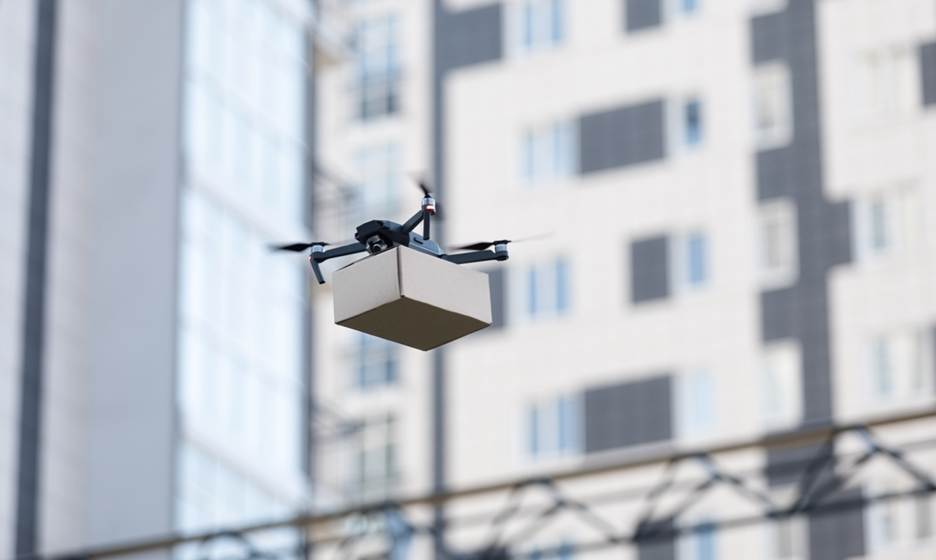 **Delivery drone carrying a package over urban buildings. Source: Envato**
DoorDash says it designed loading options to fit existing restaurant operations. That’s the part investors should pay attention to. A delivery network needs more than aircraft: it needs loading equipment, sensors and batteries capable of powering repeated trips with cargo.
As machines take on more work, demand can spread to suppliers well beyond the best-known AI companies. The hard question is which businesses can turn interest in these systems into products customers actually buy and use.
AI that has to work in the physical world
I call this “physical AI”: artificial intelligence that lets machines act in their surroundings. The category includes warehouse robots, self-driving vehicles and drones that navigate without a person steering every movement. Humanoid robots could eventually work in settings built for people. These systems face real obstacles and real consequences. A warehouse robot must move goods without damaging them or injuring someone. A delivery drone has to reach the right address and lower its cargo safely. Intelligence matters only if the machine can do the job dependably. Some businesses already sell into this shift. Symbotic Inc. (SYM) supplies robotic systems for moving and organizing warehouse goods. In the third quarter of fiscal 2026, it reported $721 million in revenue, up 22% from a year earlier, and $55 million in net income. Those figures give investors sales and profits to assess, rather than a promise alone. There’s a basic constraint behind every mobile machine: power.Why battery performance matters
A drone flying across town or a robot moving through a warehouse can’t trail a power cord. It has to carry its energy, and a larger battery adds weight. That can mean less room for cargo or less useful work per trip. Charging also takes time, while repeated use wears batteries down. For a delivery operator, that trade-off can determine whether another flight is worthwhile. For a business using robots, it can determine how much of the workday the equipment spends charging. Battery performance therefore reaches beyond electric cars: it shapes the economics of machines that need to move freely. Solid-state batteries are one possible route. They replace the liquid electrolyte used in conventional batteries with a solid material. Depending on the design, they may store more energy in a smaller or lighter package and reduce some fire risks. The technology still has practical hurdles. Oak Ridge National Laboratory researchers are testing whether battery advances can hold up beyond small laboratory experiments, including for drones and robotics. Sandia researchers are studying how solid-state batteries can fail and overheat. And manufacturers still need batteries that survive repeated use, can be produced consistently and cost little enough for customers to buy.From a promising design to production
Battery chemistry is only part of the supply chain. Businesses also need reliable products in useful quantities today, while researchers work on the next generation. On July 14, Re:Build Manufacturing announced a line of U.S.-assembled lithium-ion battery packs for commercial and defense drones. The company tied the launch to a wider drone manufacturing expansion at its Pennsylvania facility, revitalized through an $81 million investment. Production capacity matters especially in defense. A capable design has limited value if equipment arrives too slowly or replacement parts are hard to source. As AI enters drones and other physical systems, failures can have consequences far beyond a delayed meal. The equipment has to work when needed, and in sufficient numbers.Where investors can look
At July’s Pennsylvania Defense and Innovation Summit, government, finance, technology and military leaders met at the U.S. Army War College. Sen. Dave McCormick’s office reported more than $10 billion in new investment commitments across shipbuilding, advanced manufacturing, AI and robotics. Announcements included a drone battery production line, expanded manufacturing facilities and equipment intended to increase output. Commitments still have to become operating capacity, but they point toward areas investors can investigate. The next test comes when customers move from trying a handful of drones to ordering thousands. Manufacturers then need more batteries, motors and specialized components, along with dependable raw material supplies and suppliers able to raise output without sacrificing quality. Businesses that solve those bottlenecks may become important to their customers’ growth. I’m following the buildout down to the businesses that make it possible. My latest briefing examines the investment case behind the effort to rebuild America’s industrial capacity. It covers the companies I’m watching, why their capabilities matter and which developments could bring them to investors’ attention. Watch the briefing to see the companies I’m tracking as America funds and builds its next generation of machines. Sincerely, Luke Lango
Senior Investment Analyst, InvestorPlace
About the Analyst
Louis Navellier, editor of Market 360, has advised tens of thousands of investors for more than three decades. He is known for his focus on growth stocks and for managing investment portfolios.