College closures and mergers are reshaping the choices students face
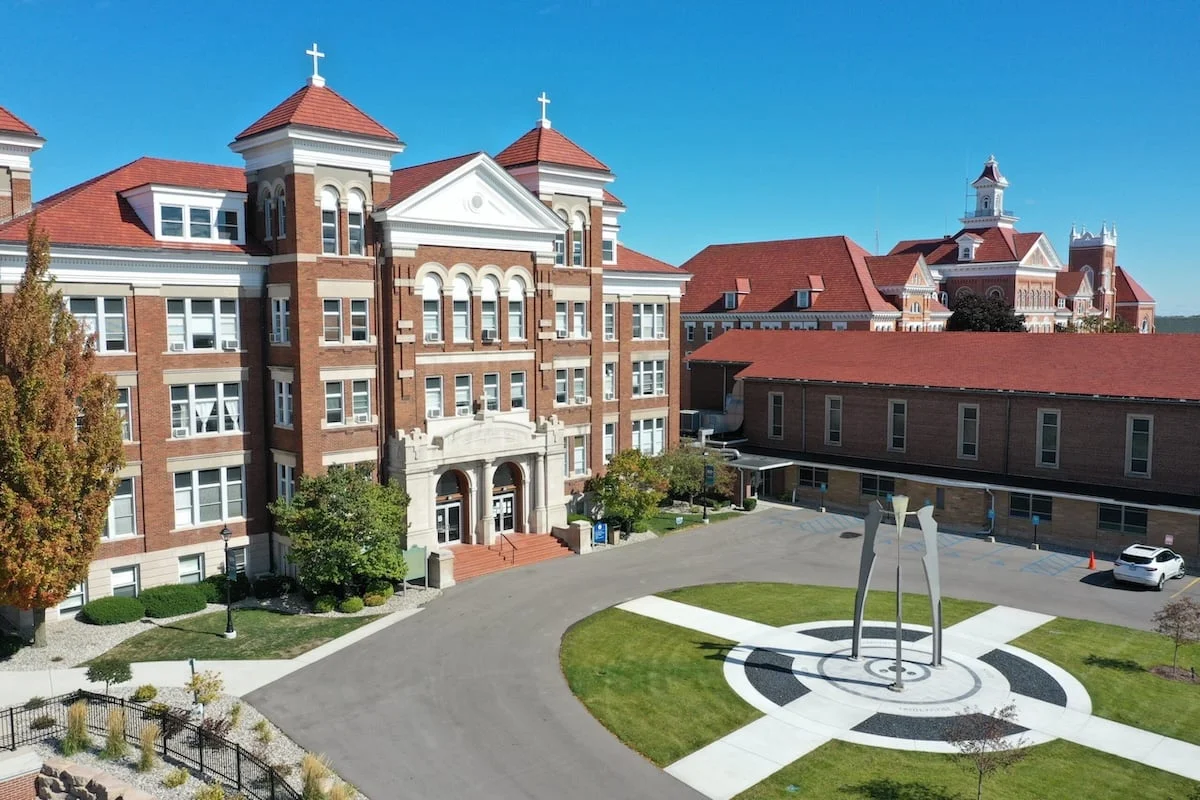
The quiet since July doesn’t mean the pressure has eased. At least nine U.S. nonprofit colleges have closed or announced plans to close in 2026, and the consequences are still unfolding: on October 20, Anna Maria College canceled its campus auction after no offer met the minimum terms. The last closure announcement came from the University of Valley Forge on July 29.
There’s a second, less visible measure of strain. Four college mergers have taken effect this year, with six more awaiting accreditor or federal approval. Huron Consulting estimates that 442 of the country’s roughly 1,700 private nonprofit colleges could close or merge over the next decade. That projection is more significant than any single closure: consolidation may become a defining feature of the choices students and families have to weigh.
Massachusetts is trying to give families earlier notice. Under a new rule, private colleges must post a public warning by December 31 if they may be unable to meet their obligations within 18 months. The requirement arrives as many schools face financial strain while raising tuition. Families can review warning signs that a college may be in trouble, but there’s no national system that gives every student the same early alert.
Closures and mergers also reach beyond small private colleges. Kean University, Lackawanna College and Northeastern University completed mergers this summer; Willamette University and Pacific University signed a binding agreement in Oregon. And Penn State’s plan to close 47 programs shows that financial pressure can mean cutting academic offerings even at a large public university.
This tracker covers closures, schools considered at risk and mergers, drawing on institutional announcements and verified reporting through October 28, 2026. If you’re comparing colleges, use the College ROI calculator alongside the list.
Table Of Contents
2026 College Closure List
Nine nonprofit colleges have closed or announced a closure in 2026. Three are in Massachusetts, and three announced their plans within a single week in February. Across the list, steep enrollment declines recur—and most schools displayed warning signs families can monitor.
| College | State | Announced | Final Term Or Status |
|---|---|---|---|
| Siena Heights University | MI | June 30, 2025 | End of 2025–26 academic year |
| Trinity Christian College | IL | November 4, 2025 | Closed, final commencement May 8, 2026 |
| Sterling College | VT | November 2025 | Closed, final commencement May 16, 2026 |
| Providence Christian College | CA | February 7, 2026 | End of 2025–26 academic year |
| Lourdes University | OH | February 11, 2026 | End of spring 2026 |
| Labouré College Of Healthcare | MA | February 2026 | Operations ended August 31, 2026 |
| Hampshire College | MA | April 14, 2026 | Closing end of December 2026 |
| Anna Maria College | MA | April 23, 2026 | Closed May 2026, in Chapter 11 |
| University Of Valley Forge | PA | July 29, 2026 | Instruction ended August 26, 2026 |
Anna Maria’s shutdown has been especially difficult. The college filed for Chapter 11 in June and agreed to sell its nursing program for $1.1 million toward its debts. Former students who left during the academic year should check how leaving college affects financial aid.
Hampshire still plans to close at the end of December 2026. A loan agreement reached in June is funding its final fall semester after the college warned it might have to close sooner. Students admitted for fall 2026 had to reconsider their college choice after acceptance, and the school refunded their deposits.
Valley Forge moved from announcement to the end of instruction in less than a month: classes stopped August 26, 2026. Its accreditation ended September 12 after the school surrendered it, according to the Middle States Commission on Higher Education. Messiah University is among three recommended transfer partners; former students can assess other options with free college comparison tools.
The recent closures follow an equally difficult 2025. Inside Higher Ed counted 16 nonprofit colleges announcing closures last year, the same number as in 2024. Budget pressure affects larger institutions too: the University of Denver faced a $30 million shortfall and eliminated five departments in a restructuring.
Several patterns show up across the 2026 closures. Nearly every school had lost 30% to 70% of its enrollment over the previous decade, and all depended heavily on net tuition revenue. That reliance ties their finances to the way colleges set the price of a degree.
Federal grant losses added pressure at some schools heading into fiscal 2026. Providence Christian said it would lose its Hispanic-serving institution grant, worth about $600,000 a year; its $25,322 endowment could not absorb that gap. Lourdes said the Sisters of St. Francis could no longer subsidize the 68-year-old university. It worked with the University of Toledo on a path for students to transfer.
Labouré, a nursing-focused college in Milton, moved its programs to nearby Curry College. Anna Maria’s FY2025 audit included a “going concern” qualification, which led to new federal financial aid restrictions. That kind of audit warning is among the clearest signals of possible closure; at Anna Maria, it came only weeks before the decision.
Which Colleges Are At Risk Of Closing In 2027?
There is no official national roster of colleges at risk. Massachusetts is set to publish the first public notices of this kind: private colleges must post notice by December 31 if they may fall short of their obligations within 18 months. Elsewhere, families must watch for the five common warning signs themselves.
The potential scale is substantial. Huron Consulting forecasts that 442 of about 1,700 private nonprofit colleges could close or merge in the next 10 years, according to The Hechinger Report. Public institutions face pressure too. Consultants warned Southern Oregon University could risk closure without deep cuts, despite receiving $15 million in emergency state aid. Many colleges are already reducing jobs and academic programs to contain costs.
Closures Already Scheduled For 2027
Several schools and campuses have already set 2027 end dates. Students who will need to transfer should start planning early and can compare options with the College ROI calculator.
- California College of the Arts: The San Francisco institution plans to close after the 2026–27 academic year; Vanderbilt University will take over its campus.
- Seven Penn State campuses: Trustees voted to close DuBois, Fayette, Mont Alto, New Kensington, Shenango, Wilkes-Barre and York after the spring 2027 term.
- Middlebury Institute of International Studies: Middlebury College plans to end the institute’s residential graduate programs in Monterey by June 2027.
- UHSP non-pharmacy programs: The University of Health Sciences and Pharmacy in St. Louis will end its other programs after 2026–27, as its pharmacy college moves to Washington University in St. Louis.
- M State Detroit Lakes: Minnesota State Community and Technical College is advancing plans to close the Detroit Lakes campus. Its other three campuses will remain open.
Which Colleges Are Merging In 2026?
Four mergers have taken effect in 2026, while six others are still moving through federal or accreditor review. A merger can leave a campus name in place, which makes it less visible than a closure; the underlying financial pressures may look much the same. In June, Under Secretary of Education Nicholas Kent told financial aid administrators the department wants to make the process “a lot easier.” Read more about Under Secretary Kent.
| Merger | State | Status | Key Date |
|---|---|---|---|
| Georgia Southern And East Georgia State | GA | Done | January 1, 2026 |
| Kean And New Jersey City University | NJ | Done | July 1, 2026 |
| Lackawanna And Peirce | PA | Done | July 8, 2026 |
| Northeastern And Marymount Manhattan | NY | Done | July 2026 |
| Gannon And Ursuline | PA, OH | In progress | Boards combined June 30, 2026 |
| Willamette And Pacific | OR | In progress | Expected early 2027 |
| WashU And UHSP Pharmacy College | MO | In progress | 2027 |
| Russell Sage And Albany College Of Pharmacy | NY | In progress | By fall 2027 |
| Elon And Queens | NC | In progress | Full merger by 2028 |
| Villanova And Rosemont | PA | In progress | 2028 |
What Changed Since July
This summer’s merger activity largely came down to final federal and accreditor approvals. For students at an acquired school, the practical question is what happens to tuition and the amount families pay out of pocket when the acquiring institution’s prices take effect.
How the merger wave is changing campuses
These deals show how often a college’s name and campus can survive even when its independence does not. Kean University completed its merger with New Jersey City University on July 1; the Jersey City site now operates as Kean Jersey City. The U.S. Department of Education finalized Lackawanna College’s merger with Peirce College on July 8, closing a process that began in August 2024. Northeastern University also completed its merger with Marymount Manhattan College in July after receiving final approvals. Its Upper East Side location is now Northeastern University – New York City.
Other combinations are still taking shape. Elon took control of Queens after an accreditor approved the first step in June, with the full merger expected by 2028; Queens diplomas will identify Queens College as part of the university. Gannon’s president became Ursuline’s president on June 30, when a consolidated board took over. Ursuline is set to operate as the Ursuline College Campus of Gannon University.
Willamette and Pacific’s boards ratified a merger agreement in July. The proposed combined institution, provisionally called the University of the Northwest, is expected to open in early 2027, subject to approvals. In a separate February agreement, the University of Health Sciences and Pharmacy in St. Louis agreed to fold its pharmacy college into Washington University in St. Louis. Rosemont students still enrolled on December 1, 2026, will be admitted to Villanova’s College of Professional Studies; the campus is scheduled to become Villanova University, Rosemont Campus in 2028.
Two for-profit transactions carry a different set of questions. Perdoceo Education agreed to acquire South University for $140 million and convert it to a for-profit school. Westcliff University acquired Pacific College in August, as Congress considers a bill that would cut off federal student aid to for-profit colleges. That policy debate could affect how these deals are viewed, though the fragment offers no indication of the bill’s prospects.
What students and families should weigh
A merger or closure announcement can change your options for completing a degree, handling debt and keeping financial aid. The key choice may be between a teach-out arrangement and seeking a closed school discharge. Those paths have different consequences for loans and credits, so get the terms in writing before deciding.
Teach-out or closed school discharge?
Federal student loans may qualify for discharge if a college closes while you’re enrolled or soon after you withdraw. For loans first disbursed on or after July 1, 2020, the school generally must close within 180 days of your withdrawal; loans disbursed earlier use a 120-day window, according to Federal Student Aid. Completing a comparable program through a teach-out or by transferring credits makes you ineligible for that discharge.
The discharge applies to federal loans. If you borrowed privately, contact your lender to ask what options your agreement allows. And if you believe the school misled you before closing, you can review whether borrower defense to repayment may apply.
Many schools closing in 2026 arranged teach-out partners. Providence Christian worked with Biola, Concordia and The Master’s University; Lourdes partnered with the University of Toledo; and Trinity Christian reached agreements with Saint Xavier, Calvin and Olivet Nazarene universities. Compare completion outcomes and program fit using free college comparison websites before enrolling.
Check credits, costs and aid
A receiving college may accept credits without applying them to the degree you want. That’s a particular concern for specialized coursework in nursing, education and the arts. Ask for a program-level credit evaluation, and review the new school’s refund policy before paying a deposit.
Financial aid is recalculated at the new institution using its cost of attendance, including eligibility for a Pell Grant. State aid rules differ. If your plan depends on Pennsylvania’s PHEAA grants, New Jersey’s TAG or a Cal Grant, confirm portability with the relevant program before transferring. Leaving school can also affect your financial aid options.
Look at the school’s finances before enrolling
College Scorecard data on enrollment, graduation and transfer rates can help families assess a school’s trajectory. Other sources are collected in these free college comparison tools.
Enrollment falling more than 25% over five years and a tuition discount rate above 55% are warning signs. A failing federal financial responsibility composite score or an audit that raises a “going concern” issue points to a more serious problem. The guide to five signs a college could close explains what to look for. These indicators don’t establish that a school will shut down, but they’re reason to ask sharper questions before committing.
Questions students often ask
How many colleges closed in 2026?
At least nine U.S. nonprofit colleges closed or announced closures in 2026, from Siena Heights University in Michigan to the University of Valley Forge in Pennsylvania. Many had shown signs of financial strain for years.
What happens to my student loans if my college closes?
Your federal loans may qualify for a closed school discharge if you were enrolled at closure or withdrew shortly beforehand. Completing a comparable program through a teach-out removes that option. Private student loans aren’t covered by the federal discharge, so ask your lender about your account.
Can I get my transcript after my college closes?
Yes. A records custodian takes responsibility for student records when a college closes. Regis College holds Anna Maria College’s records, while Hampshire College’s records are due to move to UMass Amherst after December 31, 2026. Valley Forge students can order transcripts through the National Student Clearinghouse. If you leave before finishing, check how that affects your financial aid as well.
Is there a list of colleges at risk of closing?
There’s no official national list. Massachusetts plans to publish its first state-level notices by December 31, 2026, and Huron Consulting estimates that 442 private colleges nationwide are at risk. For now, checking your school against the five warning signs is a practical starting point.