The Jet Fuel Crisis: Implications for Summer Travel
May 3, 2026 Step onto any busy airport tarmac around the globe, and you’ll be greeted by a familiar scent: the distinct, oily aroma of jet fuel, reminiscent of antiquated workshops. It's an integral part of air travel, a backdrop to the hustle and bustle of airports that travelers have come to associate with their journeys. However, this commonplace presence is now a cause for concern. Recently, the cost of jet fuel has surged due to escalating tensions in the Middle East, sending ripples through the travel industry. Prices have jumped dramatically since hostilities began, and concerns loom over potential fuel shortages if the Strait of Hormuz remains closed. This geopolitical instability is not just a far-off issue; it directly impacts the travel plans of holidaymakers, particularly as we approach the peak summer season. Airlines are already grappling with this reality, adjusting their operations in response to soaring fuel costs. Many have raised ticket prices, while others have slashed flight capacity. The vulnerability of the UK, Europe’s largest consumer of jet fuel, has become glaringly evident. If a solution isn't found soon to alleviate fuel shortages, travelers could face significant disruptions and cancellations during what should be a time for summer vacations.The Scramble for Fuel
The Gulf region, normally a powerhouse in jet fuel production, has been unable to meet demand since the Strait of Hormuz was blocked for over eight weeks, leading to an urgent search for alternative supplies. Historically, the Gulf accounts for about 20% of the daily jet fuel exchanged on global markets, and Europe relies heavily on these imports, with over half of its jet fuel needs satisfied by Gulf sources. With sources of fuel limited, competition for available jet fuel has intensified, resulting in steep price hikes. Back in late February, jet fuel prices stood at approximately $831 per tonne. However, by early April, that figure soared to $1,838—an increase of more than 120%. Though prices have dipped slightly, they remain stubbornly high, often exceeding $1,500 per tonne.The Refining Dilemma
Understanding jet fuel pricing requires a look at refining capacity. Jet fuel, a refined form of kerosene mixed with specific additives, originates from crude oil through fractional distillation. The contraction of refining capacity in Europe—largely due to recent closures—places additional strain on the market. Amaar Khan, head of jet fuel pricing at Argus Media, points out a stark reality: "We've had five refinery closures in the last two and a bit years in Europe, whereas jet fuel demand has been rising year on year." The imbalance of decreasing supply against an increasing demand has inevitably led to soaring prices, especially as the UK finds itself reliant on imports to meet 65% of its fuel needs, with only four refineries currently operational.Operational Adjustments and Costs
For airlines, fuel represents a significant portion of their operational expenses, usually comprising 25-30% of overall costs, according to the International Air Transport Association (IATA). Consequently, rising fuel prices inevitably erode profitability margins. Airlines typically employ hedging strategies to mitigate the financial impact of fluctuating fuel costs, essentially locking in prices to avoid drastic spikes. However, even these strategies can fall short. EasyJet, for instance, hedged 80% of its fuel supplies for the first half of 2026 at $717 per tonne. This approach left them vulnerable for the remaining supply, with the fluctuating market causing an additional cost burden of £25 million in March alone. The implications for travelers are clear. Without intervention to stabilize fuel supplies and prices, the anticipated disruptions could mar summer travel plans for millions. The situation remains fluid as the industry watches closely for signs of recovery in both fuel availability and pricing.US airlines have taken on significant exposure during the current fuel crisis by opting not to hedge their fuel costs in recent years. This decision, while potentially cost-saving in a declining price environment, has now left them vulnerable as oil prices surge. In contrast, European carriers like Air France KLM, Air Canada, and SAS have reacted proactively, announcing reductions in their summer schedules. For instance, Lufthansa revealed plans to cut 20,000 flights by the end of October, illustrating the intensity of the current strain on operations.
Jonathan Hinkles, CEO of Skybus and former chief executive of Loganair, provides insight into the financial toll of the crisis, stating, "If a route was marginally profitable before this crisis came along, it is now firmly underwater and losing money in a big way." This assessment underscores the desperation many airlines now face as they navigate drastically altered market conditions.
Travelers are encountering rising fares, particularly on long-haul flights. Research from consultancy Teneo indicates that tickets, such as a London to Melbourne flight, now cost an astonishing 76% more compared to last year. The substantial reduction in capacity combined with soaring fuel prices is driving these increases, especially among routes typically served by major Gulf carriers.
United Airlines has been particularly aggressive in passing these costs onto customers. CEO Scott Kirby made it clear to investors that the airline intends to recover the full amount of the rise in jet fuel prices "as quickly as possible." Similarly, International Airlines Group, which encompasses British Airways and others, has cautioned that ticket prices will rise. Virgin Atlantic has already enacted surcharges that range from £50 on economy tickets to £360 for business class.

On the other hand, short-haul flights within Europe haven't seen the same price spike. József Váradi, the CEO of Wizz Air, noted a decline in fares as airlines aim to attract hesitant travelers. This hesitancy springs from uncertainty, he explained, which can be countered through price stimulation. The result? Some airlines are even lowering prices to boost demand.
In this turbulent environment, low-cost carriers with better hedging strategies hold a competitive edge. John Strickland from JLS Consulting argues that their ability to mitigate fuel costs will enable them to exert pressure on operators who are less shielded from rising prices. "They will look to put pressure on other people who are not in such a healthy position," he asserts. For those watching the market, this shift could reshape competition and pricing strategies significantly.
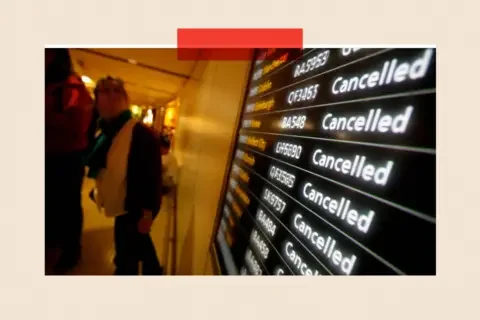
### Navigating the Jet Fuel Crisis The current jet fuel situation presents serious implications for the aviation sector, especially as airlines brace for further cancellations and delays. In a move that highlights the gravity of the crisis, regulatory bodies have acknowledged that shortages will qualify as "exceptional circumstances." This classification permits airlines to sidestep financial compensation to affected customers, although they remain obligated to provide reimbursement or alternative travel arrangements. It's a troubling concession that underscores just how dire conditions are becoming. While airlines might find temporary respite from compensation claims, the underlying issue of fuel scarcity remains unresolved. ### The Mechanics of Tankering Given the circumstances, airlines might resort to tactics such as "tankering," where they load excess fuel at cheaper departure airports to cut costs. However, this strategy is not without its downsides; taking off with a heavier load means higher fuel consumption during flight, which further exacerbates the pollution problem. While tankering can be a short-term fix, it doesn't address the root causes behind the mounting fuel crisis. The broader issue is the UK’s reliance on imported fuel, a situation that has become precarious over recent decades. Once home to eighteen refineries, the UK now operates with a mere four, limiting domestic production capabilities. ### Rethinking Domestic Production Jonathan Hinkles, CEO of Skybus, encapsulates the urgency for structural change: "Do we need more resilience from a homegrown perspective in terms of our capacity in the UK to be able to refine a higher proportion of our fuel?" This sentiment captures a critical conversation about boosting local production. However, the intricacies of increasing refining capacities present formidable challenges. Current refineries are being tasked with diverting their focus to jet fuel production, but industry experts like Amaar Khan caution that changes won't translate to immediate output increases. One hopeful avenue is the development of Sustainable Aviation Fuel (SAF), which can be created from a variety of materials, including agricultural byproducts and waste oils. Despite its potential for reducing carbon emissions, SAF remains in the nascent stages within the market, with limited availability and exorbitant costs—often exceeding $1,000 per tonne compared to traditional fuels. ### The Path Ahead There’s a palpable tension surrounding the future of jet fuel, as calls for increased SAF production intensify. Activists like Tom Taylor from Transport and Environment acknowledge that ramping up production isn’t a swift solution. "Increasing SAF production won't eliminate jet fuel imports overnight," he warns, emphasizing that gradual progress is essential for transitioning to more sustainable energy sources. Nonetheless, investment in SAF technology is imperative. Setting up a dependable supply chain alternative could eventually shift the aviation industry away from volatile fossil fuel markets. But it’s going to require commitment and resources, and those conditions are daunting in the current climate. ### A Stormy Outlook As the aviation sector continues to wrestle with supply chain disruptions, the immediate outlook remains bleak. With jet fuel prices unlikely to decrease swiftly, the industry could find itself facing significant turbulence this summer. The interplay of geopolitical tensions and import dependencies complicates any hopes for a quick recovery. If you're in this space, it’s essential to keep a close watch on developments. The stakes are high, and the solutions seem as elusive as the clarity this industry desperately needs.